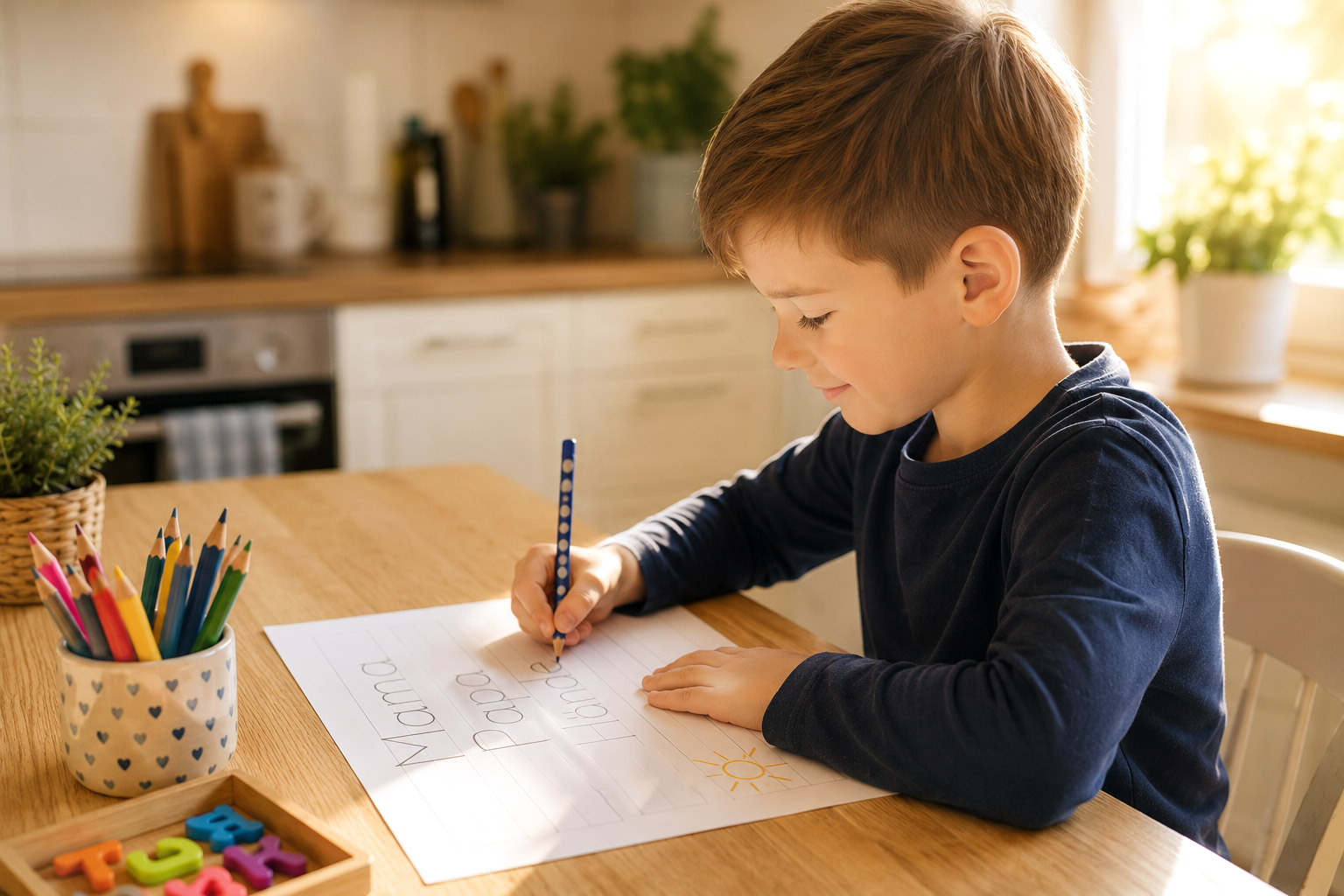
Learning to Write First Words is an exciting milestone for many children. While children may already recognize individual letters, combining them into meaningful words is a major step on the journey toward reading and writing.
With patience, playful activities, and the right encouragement, parents can support their child in writing first words independently while developing a love for language and literacy.
In this article, you’ll learn when children usually begin writing words, which skills help, and how parents can support this process at home.
In this article:
- When Do Children Begin Writing Their First Words?
- Which Skills Help?
- Playful Activities at Home
- Which Words Should Children Start With?
- Common Mistakes to Avoid
- Using Digital Support Wisely
- Conclusion
When Do Children Begin Writing Their First Words?
Many children become interested in writing during the preschool years. They often start by writing individual letters before moving on to their first words.
Children frequently begin by writing their own name or familiar words from everyday life.
The exact timing varies greatly. Some children write their first words at the age of five, while others only develop this interest shortly before or after starting school.
Which Skills Help?
Children need several foundational skills before they can begin writing their first words.
- recognizing letters
- distinguishing sounds
- developing an interest in language
- strengthening fine motor skills
- mastering early writing movements
It is especially helpful when children understand that letters represent specific sounds.
Playful Activities at Home
Children learn to write their first words best through hands-on experiences.
Helpful activities include:
1. Writing Their Own Name
A child’s own name is usually the first meaningful word they want to write.
2. Labeling Family Members
Write and practice names such as Mom, Dad, Grandma, or siblings’ names.
3. Writing Favorite Animals
Children enjoy writing words related to their interests.
4. Creating Shopping Lists Together
Simple everyday lists provide authentic writing opportunities.
5. Building Words with Magnetic Letters
Manipulating letters physically helps children understand word construction.
6. Forming Letters with Play Dough
Combining fine motor activities with literacy strengthens learning.
7. Labeling Picture Cards
Children can match pictures and words while practicing writing.
At first, children should be allowed to experiment freely and make mistakes as part of the learning process.
Which Words Should Children Start With?
Children learn especially easily when words have personal meaning.
Good starter words include:
- their own name
- Mom
- Dad
- dog
- cat
- car
- house
- Grandma
Short words with only a few letters make getting started easier.
Common Mistakes to Avoid
Many parents correct every mistake immediately. This can quickly lead to frustration.
Especially at the beginning, children often write words exactly as they hear them. This is completely normal and an important part of literacy development.
Try to avoid:
- constant correction
- comparing children with others
- practice sessions that are too long
- performance pressure
The joy of writing is far more important than perfect spelling.
Using Digital Support Wisely
Digital learning tools can support children while they learn to write their first words.
Applications that connect letters, sounds, and words while motivating children to participate actively can be especially helpful.
However, digital activities should complement, not replace, practical experiences with paper, pencils, and movement.
Conclusion
Learning to write first words is one of the most exciting developmental milestones on the path toward literacy.
With playful activities, positive experiences, and plenty of encouragement, parents can optimally support their child.
As children gradually connect letters, sounds, and words, they build an important foundation for successful reading and writing.
Frequently Asked Questions About Learning to Write First Words
When do children start writing their first words?
Many children begin writing their first words between the ages of five and seven.
Which words are best for practice?
A child’s own name and short everyday words are ideal for getting started.
Should mistakes be corrected immediately?
No. Children should first be allowed to experiment and gain their own experiences.
How long should children practice?
Short sessions of five to ten minutes are usually sufficient.
Is it important that children already know all letters?
No. Children can begin writing first words even while they are still learning the alphabet.
ABC with Yeti is a lovingly designed learning app for preschool and elementary school children.
Children learn playfully:
- letters
- handwriting
- first words
The app offers:
- 8+ learning activities
- 80 unlockable animals
- 9 different handwriting fonts
- Suitable for kindergarten, preschool, and elementary school
Discover More Parent Tips
From first letters and fine motor skills to handwriting readiness and school preparation: explore many more practical activities and ideas for preschoolers and elementary school children.
Explore all Parent Tips →