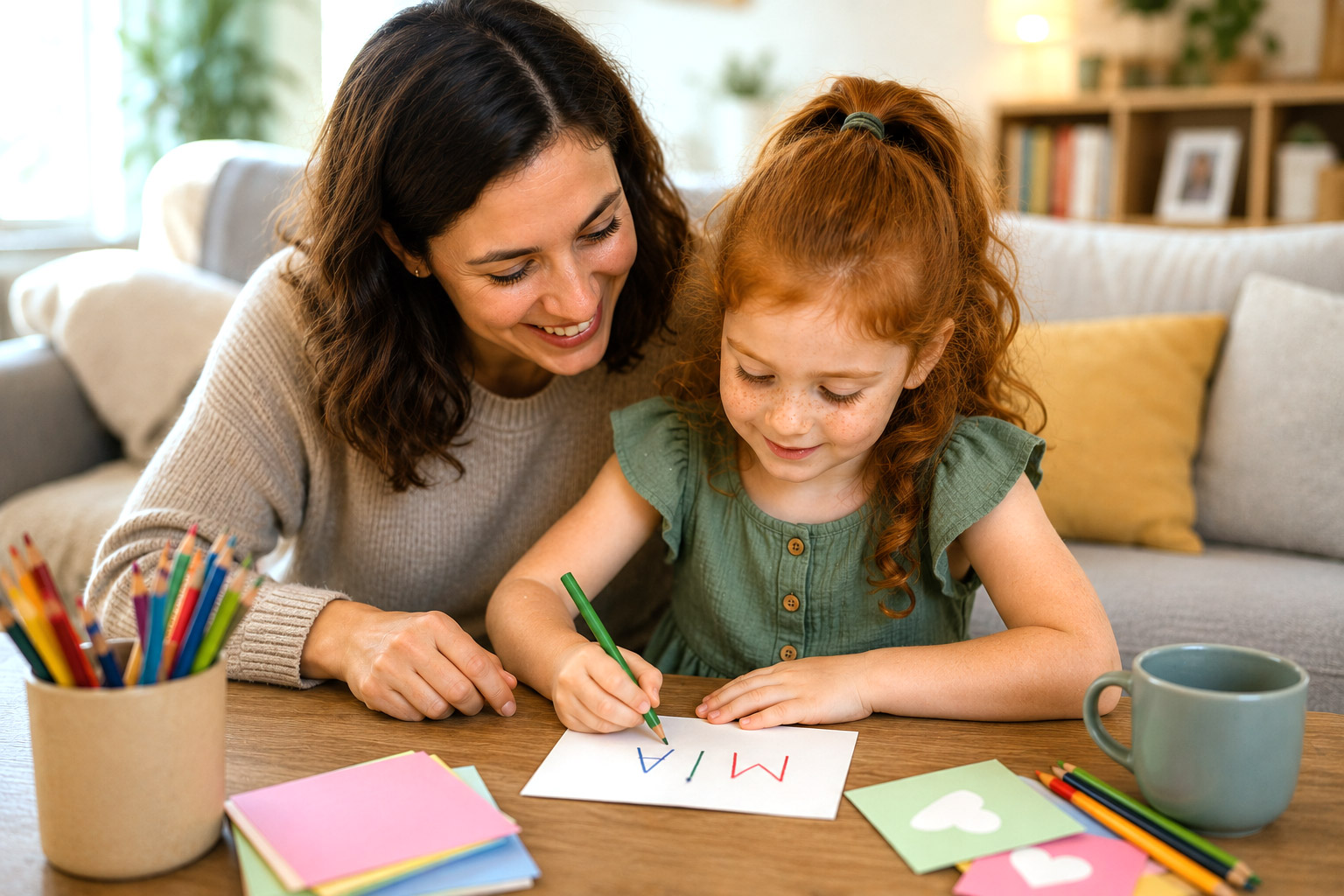
Learning to Write in Preschool does not mean that children need to write complete words or sentences before starting school. Instead, preschoolers benefit most from playful experiences with letters, books, language, and early writing activities.
Many parents wonder whether their child should already be able to write before entering elementary school. The reassuring answer is: no.
Every child develops at their own pace. Some children write their names early, while others become interested in writing shortly before school begins. Both are completely normal.
In this article:
- Do Preschoolers Need to Write Before School?
- What Children Really Need Before Starting School
- Encouraging Writing Through Play
- Common Mistakes When Teaching Writing
- Using Digital Learning Wisely
- Conclusion
Do Preschoolers Need to Write Before School?
Many parents ask whether their child should already be able to write before entering school. The answer is no.
Before starting school, children do not need to write complete words or sentences. Much more important is developing curiosity about letters, language, and print through everyday experiences.
Some children can already write their names or recognize individual letters. Others only become interested in writing shortly before school starts. Both developmental paths are perfectly normal.
What matters most is not how much a child can already do, but whether they enjoy learning.
What Children Really Need Before Starting School
For a successful start at school, several foundational skills are more important than writing perfectly.
Important skills include:
- fine motor skills
- concentration skills
- language comprehension
- listening skills
- interest in books and stories
- independence in everyday life
- motivation and enjoyment of learning
Children especially benefit from regular opportunities to draw, paint, craft, cut with scissors, and explore language. These activities strengthen essential foundations for later writing development.
Encouraging Writing Through Play
Children learn most successfully when learning is fun.
Suitable activities include:
- writing their own name
- discovering letters in books
- recognizing words on signs
- forming letters with play dough
- writing with finger paint
- drawing words on whiteboards or chalkboards
- rhyming and language games
Short practice sessions of five to ten minutes are usually completely sufficient. Consistency is far more important than duration.
Children should never feel as if they are already attending formal lessons. Preschool is about exploring, experimenting, and learning through play.
Common Mistakes When Teaching Writing
Parents naturally want to support their children. However, certain approaches can unintentionally make learning more difficult.
Common mistakes include:
- putting too much pressure on children
- expecting too much too early
- constantly correcting mistakes
- comparing children with others
- planning sessions that are too long
Children develop at very different speeds. What is easy for one child may still be challenging for another.
Praise, patience, and small success experiences support motivation much more effectively than criticism.
Using Digital Learning Wisely
Digital learning tools can complement school readiness activities. Many children enjoy using tablets and interactive educational games.
However, it is important that digital content is age-appropriate, educational, and designed around meaningful learning goals.
Educational apps can help children explore letters, sounds, and first words in a playful way and at their own pace.
A useful complement is ABC with Yeti. The app supports children in learning letters and handwriting through more than eight learning activities, 80 unlockable animals, and nine different handwriting fonts.
Conclusion
Preschool children do not need to write perfectly before entering school. Much more important are curiosity, motivation, fine motor development, and positive learning experiences.
Through playful activities integrated into everyday life, parents can support their children while building important foundations for future school success.
Children who gain positive experiences with books, language, and early writing often begin school with greater confidence and enthusiasm.
Frequently Asked Questions About Learning to Write in Preschool
Should preschoolers be able to write their names?
No. Some children can already write their names before school starts, while others learn this skill in elementary school.
What is more important than writing?
Fine motor skills, concentration, language development, and enjoyment of learning are usually much more important for school readiness.
How long should preschoolers practice?
Short sessions of five to ten minutes are generally sufficient.
Should parents correct mistakes immediately?
No. Constant correction can reduce motivation. Positive experiences and encouragement are usually more helpful.
ABC with Yeti is a lovingly designed educational app for preschool and elementary school children.
Children learn playfully:
- letters
- handwriting
- first words
The app offers:
- 8+ learning activities
- 80 unlockable animals
- 9 different handwriting fonts
- Suitable for preschool, kindergarten and elementary school
Discover More Parent Tips
From learning letters and handwriting to fine motor skills and school readiness: explore many more practical ideas and activities for preschoolers and elementary school children.
Explore all Parent Tips →