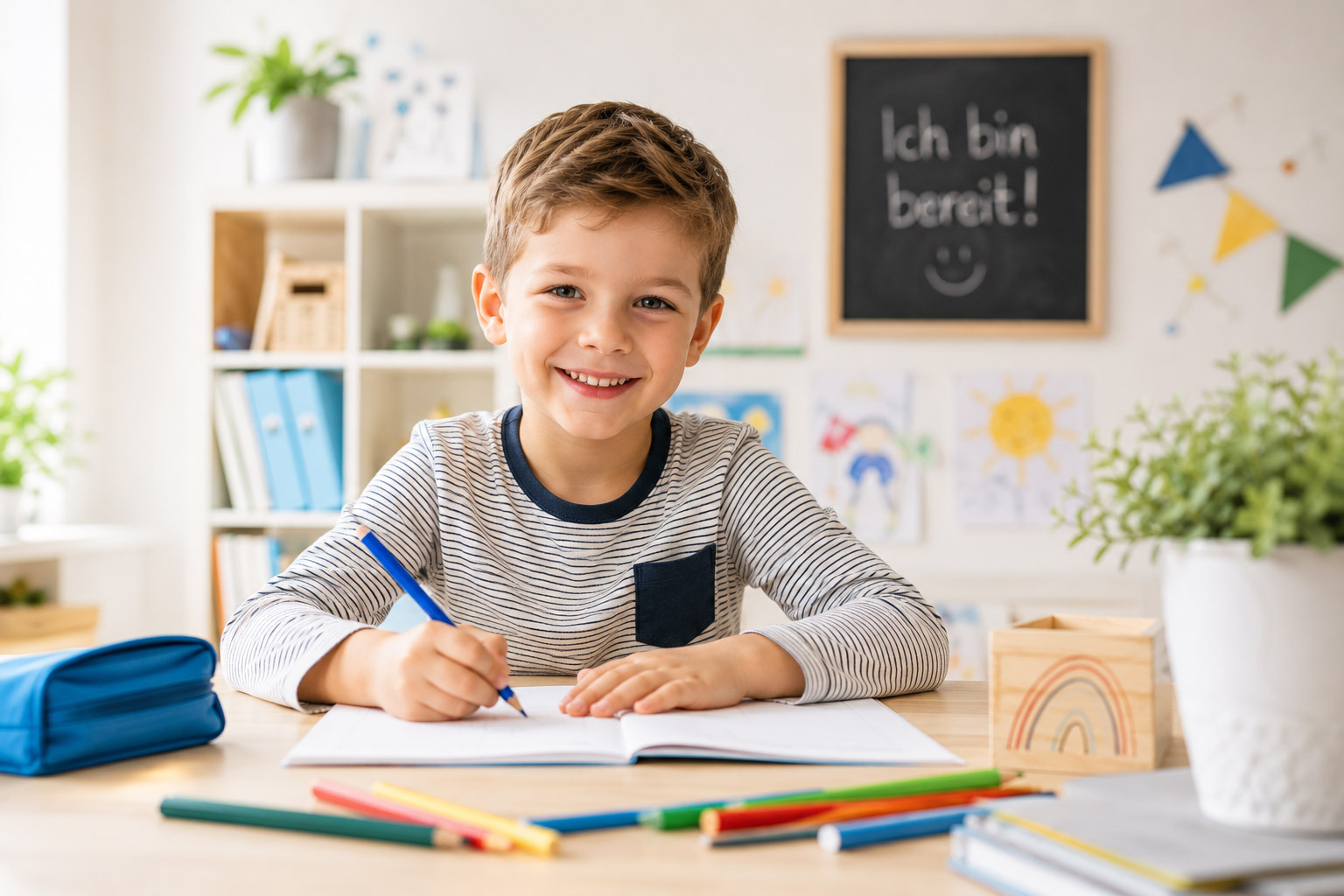
Many parents wonder during the final preschool year whether their child is ready to start school. School readiness is not about already being able to read, write, or do math perfectly. Much more important are the basic skills that help children cope with everyday school life.
Every child develops at their own pace. While some children eagerly look forward to starting school, others may need a little more time to strengthen important abilities.
The good news: school readiness can often be recognized through everyday behavior. Parents can support their child by encouraging important skills through play.
In this article:
- What Does School Readiness Mean?
- Important Signs of School Readiness
- How Parents Can Support School Readiness
- When Parents Should Take a Closer Look
- The Role of Preschool and School
- Conclusion
What Does School Readiness Mean?
School readiness describes a child’s ability to meet the demands of everyday school life. Physical, social, emotional, and cognitive skills all play an important role.
A school-ready child can concentrate for a certain period of time, understand instructions, cooperate with other children, and handle small challenges independently.
School readiness is not about already being able to read or write. These skills are systematically taught in school.
Important Signs of School Readiness
The following abilities are considered important indicators of school readiness:
- completing simple tasks independently
- staying attentive for a period of time
- understanding and following rules
- playing and cooperating with other children
- coping with frustration and minor setbacks
- showing interest in language, numbers, or letters
- using pencils and scissors appropriately for their age
No child needs to master every area perfectly. The overall picture is what matters most.
How Parents Can Support School Readiness
Parents can support their child in many different ways during everyday life.
Particularly helpful activities include:
- reading together
- playing board games
- arts and crafts
- small household responsibilities
- talking about experiences and feelings
- outdoor play and physical activity
More important than structured learning is a varied environment in which children can gain many different experiences.
When Parents Should Take a Closer Look
Some children need a little more support or additional time.
The following signs may indicate that closer observation is helpful:
- significant concentration difficulties
- major difficulties interacting with other children
- very low frustration tolerance
- noticeable language delays or difficulties
- obvious motor coordination difficulties
However, these observations do not automatically mean that a child is not ready for school. Conversations with preschool teachers or educational professionals can help assess the situation more accurately.
The Role of Preschool and School
Preschool teachers often observe children’s development closely during the months before school starts.
School readiness assessments and discussions with parents may also help determine whether additional support could be useful.
The final decision is always made individually and considers the child’s overall development.
Conclusion
School readiness involves much more than mastering letters or numbers.
Social skills, concentration, independence, and emotional stability are equally important for a successful start at school.
Parents can best support their child by providing encouragement, building confidence, and creating many positive learning experiences.
Frequently Asked Questions About School Readiness
Does my child need to be able to read before starting school?
No. Reading and writing are systematically taught at school.
What skills are part of school readiness?
School readiness includes social, emotional, motor, and cognitive abilities.
Who decides whether a child is ready for school?
The assessment is usually made together by parents, preschool staff, schools, and school-entry health examinations.
Can school readiness be encouraged?
Yes. Reading together, playing, physical activity, and varied everyday experiences all support development.
What if my child still needs more time?
Children develop at different speeds. If concerns arise, discussing them with educational professionals can be helpful.
ABC with Yeti is a lovingly designed learning app for preschool and elementary school children.
Children learn playfully:
- letters
- handwriting
- first words
The app offers:
- 8+ learning activities
- 80 unlockable animals
- 9 different handwriting fonts
- Suitable for kindergarten, preschool, and elementary school
Discover More Parent Tips
From first letters and fine motor skills to pencil grip and school readiness: explore many more practical activities and ideas for preschoolers and elementary school children.
Explore all Parent Tips →