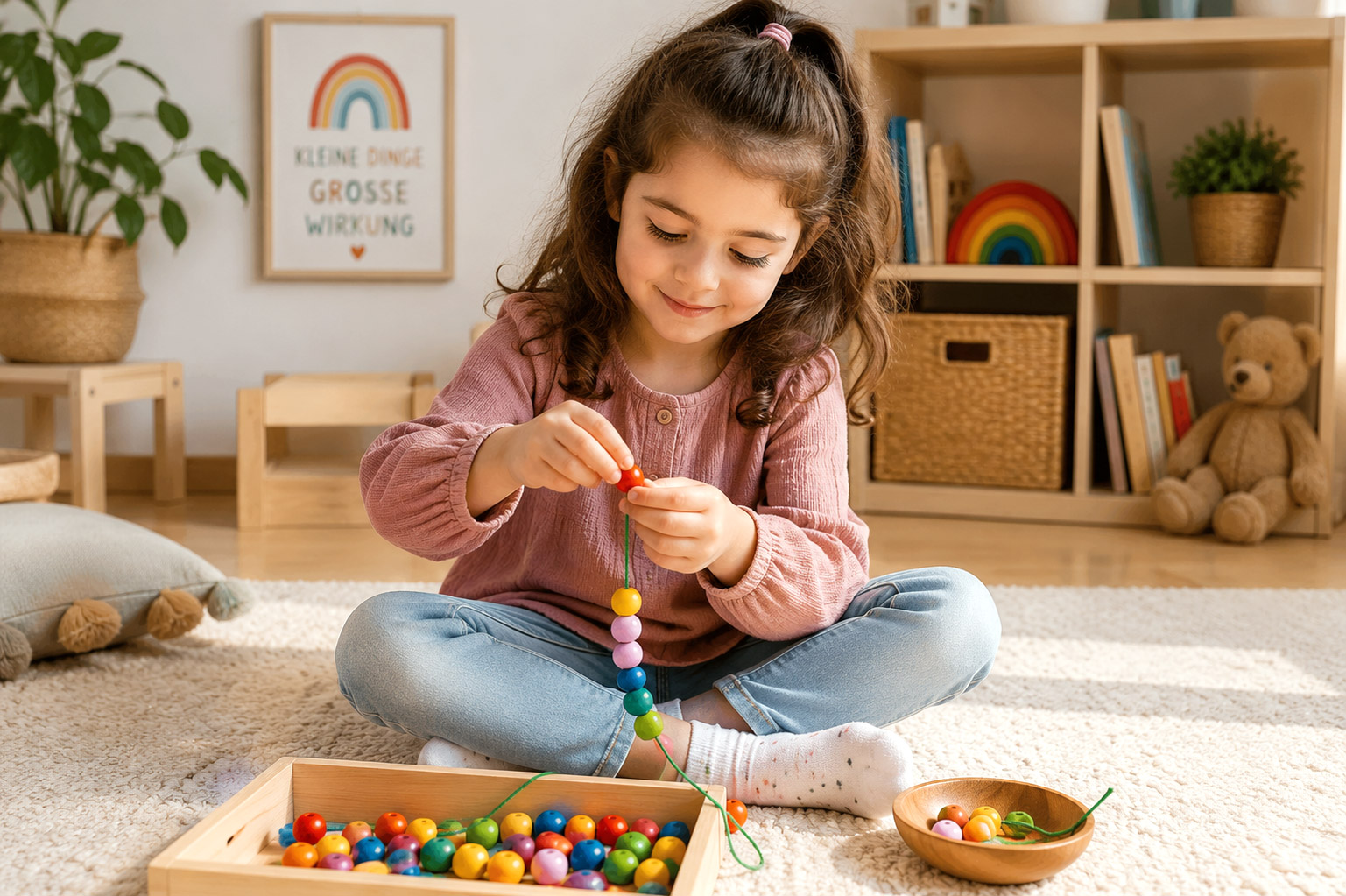
Fine Motor Skills for Preschoolers are an important foundation for later writing, drawing, and many everyday tasks. Many parents first hear the term “fine motor skills” during preschool or school readiness assessments.
However, fine motor development begins long before children start school. Activities that strengthen the small muscles of the hands and fingers help children become more confident and independent in everyday life.
The good news is that fine motor skills can easily be encouraged at home through playful activities that children genuinely enjoy.
In this article:
- Why Are Fine Motor Skills Important?
- What Is Included in Fine Motor Development?
- 10 Easy Fine Motor Activities at Home
- How Often Should Children Practice?
- Common Mistakes Parents Should Avoid
- Fine Motor Skills and School Readiness
- Conclusion
Why Are Fine Motor Skills Important?
Fine motor skills include all small and precise movements of the hands and fingers. Children need these abilities later to hold a pencil, write letters, use scissors, fasten buttons, and manipulate small objects. Researchers consider fine motor development essential for emerging writing skills and later school success.
Well-developed fine motor skills make the transition to school much easier. Children can then focus more on learning content rather than struggling with pencil control or line formation.
Fine motor activities also support independence in everyday tasks such as dressing, eating, and personal care.
What Is Included in Fine Motor Development?
Fine motor development includes much more than simply writing with a pencil.
Examples of fine motor skills include:
- grasping and holding objects
- buttoning clothes
- tying shoelaces
- threading beads
- cutting with scissors
- drawing and coloring
- crafting activities
- writing letters and words
Hand-eye coordination also plays an important role. Children learn to control their movements precisely while observing and adjusting their actions at the same time.
10 Easy Fine Motor Activities at Home
Just a few minutes of practice each day can noticeably improve fine motor skills. The most important thing is that activities remain playful and enjoyable.
1. Threading beads
Stringing colorful beads onto a cord strengthens finger dexterity, concentration, and patience.
2. Playing with play dough
Squeezing and shaping play dough strengthens hand and finger muscles. Children can create letters, animals, or simple shapes.
3. Cutting with scissors
Using child-safe scissors to cut lines, circles, or simple pictures improves hand control.
4. Using clothespins
Opening and attaching clothespins to cardboard or strings is excellent finger training.
5. Coloring and drawing
Coloring activities improve pencil control and help children learn to stay within boundaries.
6. Sorting marbles or small objects
Picking up and sorting small objects trains precise grasping movements.
7. Placing stickers
Peeling and positioning stickers improves finger coordination.
8. Building towers with blocks
Stacking blocks strengthens both fine motor skills and spatial thinking.
9. Turning screws and nuts
Construction toys with screws help children practice rotational finger movements.
10. Lacing cards
Threading strings through holes is one of the most popular preschool fine motor activities.
How Often Should Children Practice?
For preschoolers, short practice sessions are usually completely sufficient.
Recommended approaches include:
- 5 to 10 minutes per day
- varied and playful activities
- hands-on experiences
- regular repetition
Children learn much more effectively through frequent short activities than through occasional long practice sessions. Play-based experiences are especially beneficial for motivation and confidence.
Common Mistakes Parents Should Avoid
Parents naturally want to support their children as much as possible. However, some well-intentioned approaches can unintentionally reduce motivation.
Common mistakes include:
- putting children under too much pressure
- constantly correcting mistakes
- choosing activities that are too difficult
- planning sessions that are too long
- comparing children with others
Success experiences are much more important than perfection. Children develop motivation when they notice their own progress.
Fine Motor Skills and School Readiness
Good fine motor skills are among the most important prerequisites for a successful start at school. Research suggests that fine motor development contributes significantly to school readiness and later academic achievement.
Children benefit later in areas such as:
- learning to write
- drawing and coloring
- cutting with scissors
- craft projects
- working with worksheets
Children who regularly practice fine motor activities during the preschool years build valuable foundations for their first years at school.
Conclusion
Developing fine motor skills begins long before a child’s first day at school. Simple activities such as threading beads, using play dough, or cutting with scissors help children build important skills for future learning.
The most important factors are not the length of practice sessions but consistency, enjoyment, and positive experiences.
With playful activities integrated into everyday life, parents can effectively support their children’s development while laying strong foundations for handwriting and school success.
Frequently Asked Questions About Fine Motor Skills for Preschoolers
Why are fine motor skills important for preschoolers?
Fine motor skills provide the foundation for writing, drawing, crafting, cutting, and many other everyday school activities.
Which activities improve fine motor skills?
Activities such as play dough, cutting, threading beads, drawing, and lacing games are especially effective.
How often should preschoolers practice fine motor activities?
Short daily sessions of five to ten minutes are usually completely sufficient.
At what age should fine motor development begin?
Fine motor development starts during the toddler years and continues throughout preschool and elementary school.
ABC with Yeti is a lovingly designed educational app for preschool and elementary school children.
Children learn playfully:
- letters
- handwriting
- first words
The app offers:
- 8+ learning activities
- 80 unlockable animals
- 9 different handwriting fonts
- Suitable for preschool, kindergarten and elementary school
Discover More Parent Tips
From learning letters and handwriting to fine motor skills and school readiness: explore many more practical ideas and activities for preschoolers and elementary school children.
Explore all Parent Tips →