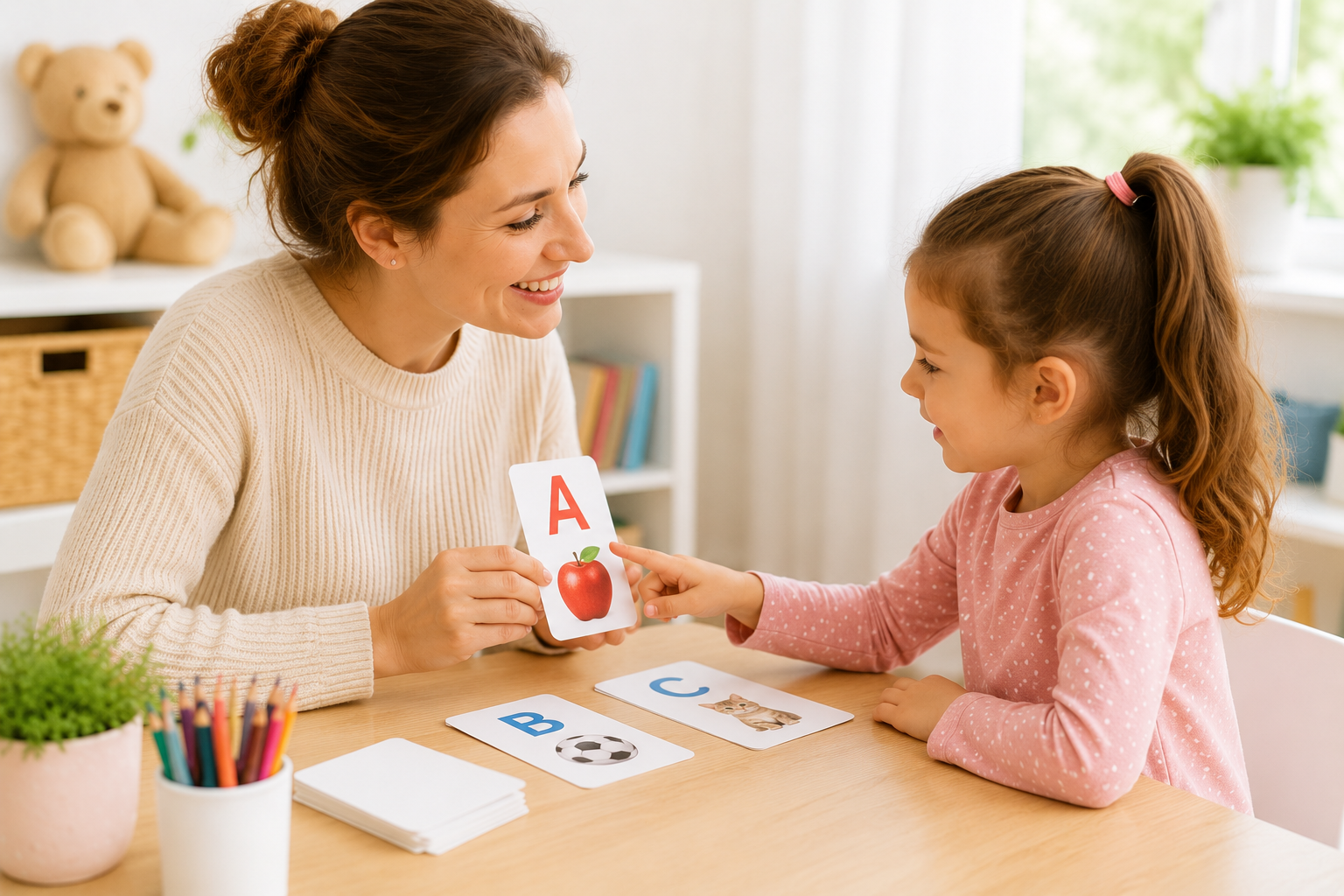
Learning initial sounds is one of the most important steps on the journey toward reading and writing. Long before children can read books or write their first words, they begin to understand that every spoken word is made up of individual sounds. This discovery forms the foundation for later reading, spelling, writing, and confident language development.
Many parents experience that exciting moment when their child suddenly says, “Bear starts with B!” or “Mouse begins with M!” These small discoveries are important milestones. Children begin to realise that words are not only meaningful but are also built from individual sounds.
The best part is that learning initial sounds does not have to feel like schoolwork. Most children develop this skill naturally through story time, songs, nursery rhymes, conversations, and everyday play. The more relaxed and enjoyable the experience is, the more children develop a lifelong love of learning.
In this article, you’ll discover why recognising initial sounds is so important, how children develop this skill, and which simple games can help support your child at home.
In This Article
- What Are Initial Sounds?
- Why Initial Sounds Matter for Learning to Read
- How Children Learn to Recognise Initial Sounds
- Letter Names vs Letter Sounds – Understanding the Difference
- The Best Games for Learning Initial Sounds
- How Preschools and Kindergartens Teach Initial Sounds
- Discovering Initial Sounds in Everyday Life
- Common Mistakes Parents Should Avoid
- Using Educational Apps Effectively
- Conclusion
What Are Initial Sounds?
An initial sound is simply the first sound you hear at the beginning of a spoken word. For example, the word “Bear” begins with the sound /b/, while “Mouse” begins with the sound /m/.
At first, children learn to hear the sound, not the letter name. They recognise sounds such as “mmmm” or “ssss” before they connect those sounds with the written letters that represent them. This understanding is an essential part of early phonics development.
Here are some common examples:
- Alligator → A
- Bear → B
- Clownfish → C
- Dolphin → D
- Elephant → E
- Fox → F
- Giraffe → G
- Horse → H
- Iguana → I
- Jaguar → J
This connection between spoken sounds and written letters is an important part of phonological awareness, one of the strongest predictors of later reading success. As children learn to hear individual sounds within words, they become better prepared for phonics, reading, spelling, and writing.
Why Initial Sounds Matter for Learning to Read
Recognising initial sounds is one of the earliest building blocks of reading. Before children can blend sounds into words or recognise written words, they first need to notice that spoken language is made up of individual sounds.
This awareness helps children understand that every letter represents a sound. Later, these sounds are blended together to read words and separated again when learning to spell.
Children who regularly play with sounds often find it easier to:
- develop phonological awareness
- recognise letter-sound relationships
- begin learning phonics
- read their first simple words
- spell familiar words
- build confidence with language
The goal isn’t to memorise the alphabet as quickly as possible. Instead, children should enjoy discovering how spoken language works. These positive experiences provide an excellent foundation for lifelong literacy.
How Children Learn to Recognise Initial Sounds
Children develop the ability to recognise initial sounds gradually. This skill grows naturally through everyday conversations, songs, nursery rhymes, storybooks, and playful language activities. Long before children learn to read, they begin noticing that words can start with the same sound.
For example, after hearing words like bear, bee, and ball, children may realise that they all begin with the same sound. This is an important milestone in developing phonological awareness, which prepares children for learning phonics and reading.
Parents can encourage this development by asking simple questions during daily activities:
- “Can you find an animal that starts with B?”
- “What sound does Fox begin with?”
- “Do Bear and Bird start with the same sound?”
- “Can you think of another word that begins like Alligator?”
- “Which animal starts with the same sound as your name?”
These playful conversations help children listen carefully and become more aware of the sounds they hear in spoken language. Keeping activities short and enjoyable is far more effective than long practice sessions.
Letter Names vs Letter Sounds – Understanding the Difference
One of the biggest challenges for many parents is understanding the difference between a letter name and a letter sound. While adults naturally think of letters such as “bee”, “cee”, or “dee”, young children benefit much more from learning the sounds they hear in words.
For example, when introducing the word Bear, children should first hear the sound /b/ rather than the letter name “bee”. This makes it much easier for them to blend sounds together later when they begin reading.
Phonics programmes used throughout England and many schools in the United States follow this same principle. Children first learn the sounds before focusing on letter names.
Examples:
- Bear → /b/
- Mouse → /m/
- Sun → /s/
- Fox → /f/
- Tiger → /t/
- Lion → /l/
Learning letter sounds first gives children a stronger foundation for decoding words, reading independently, and developing confident spelling skills.
The Best Games for Learning Initial Sounds
Children learn best through play. Fun, interactive activities make learning initial sounds enjoyable while strengthening listening skills, vocabulary, and early literacy. Even five to ten minutes a day can make a noticeable difference.
Try these popular games:
- “I Spy” using beginning sounds instead of colours.
- Sort animal picture cards by their first sound.
- Play an Initial Sound Memory game with matching picture cards.
- Find animals that begin with the same sound.
- During story time, ask which sound an animal’s name starts with.
- Group favourite animals by their beginning sound.
Rather than introducing many new sounds at once, focus on just one or two at a time. Frequent short activities help children remember much more effectively than occasional long practice sessions.
How Preschools and Kindergartens Teach Initial Sounds
Many preschools, kindergartens, and Reception classrooms introduce initial sounds long before formal reading instruction begins. The goal is not to teach children to read immediately but to develop careful listening skills and awareness of spoken language.
Teachers naturally include sound awareness throughout the day during circle time, songs, storytelling, movement activities, and classroom games. These playful experiences help children discover that words are made up of individual sounds.
Common classroom activities include:
- Nursery rhymes and finger plays
- Songs with repeating sounds
- Picture cards and storytelling circles
- Clapping syllables
- Sound boxes filled with everyday objects or animal figures
- Language games combined with movement activities
Parents can easily continue many of these activities at home. When children experience similar games both at school and at home, they gain confidence and develop their literacy skills more naturally.
Discovering Initial Sounds in Everyday Life
The best learning opportunities often happen naturally throughout the day. Children don’t need to sit at a table to practise initial sounds. Instead, they learn most effectively when language becomes part of everyday experiences.
For example, while shopping, you could ask, “Can you find an animal that starts with E?” or “Do you know an animal that begins with M?” During a walk, you might spot birds, dogs, insects, or squirrels and talk together about the sounds at the beginning of their names. These real-life experiences help children connect spoken language with the world around them.
Great everyday opportunities include:
- Conversations during breakfast
- Nature walks
- Car journeys
- Bedtime story sessions
- Trips to the zoo or wildlife park
- Board games featuring animals
The more children listen carefully to words and talk about them, the easier it becomes to recognise individual sounds. At the same time, they expand their vocabulary and strengthen their overall language development.
How Can Parents Tell When Their Child Is Ready?
Every child develops at their own pace, so there isn’t a specific age when all children begin recognising initial sounds. Instead, parents should look for small signs that their child’s phonological awareness is developing naturally.
Common signs include:
- Your child enjoys nursery rhymes and notices rhyming words.
- They can clap syllables in simple words.
- They recognise that two animal names begin with the same sound.
- They show curiosity about letters.
- They ask questions about words and their beginning sounds.
- They want to recognise or write their own name.
If your child hasn’t reached all of these milestones yet, there’s no reason to worry. These abilities develop gradually and are strengthened naturally through regular conversations, stories, songs, and playful activities.
Which Letters Should Children Learn First?
Many parents wonder whether children should learn the alphabet in a particular order. In reality, children learn best when letters have a personal meaning. The first letter of their own name, favourite animals, or familiar everyday words are often the easiest place to begin.
Animal names work especially well because children remember them easily. Words such as Alligator, Bear, Elephant, or Fox create positive associations that make letter sounds easier to remember.
Good starting points include:
- the first letter of your child’s name
- favourite animals
- beloved picture books
- everyday objects
- words your child hears frequently
The order itself is much less important than helping children enjoy exploring spoken language. Positive experiences build confidence and provide the strongest foundation for future reading and writing.
Common Challenges When Learning Initial Sounds
Not every child recognises beginning sounds immediately. Some children hear the whole word but find it difficult to isolate the very first sound. This is completely normal and forms part of natural language development.
Sounds that are similar—such as b and p, d and t, or g and k—are often confused at first. Longer animal names like Chameleon or Crocodile can also be more challenging because children have to listen carefully before identifying the initial sound. With regular playful practice, these skills improve naturally over time.
Children commonly find it difficult to:
- distinguish between similar sounds
- say the letter name instead of the letter sound
- focus on the first sound in a word
- break longer words into individual sounds
- notice the sound at the beginning of unfamiliar words
- feel confident when hearing new vocabulary
Encouragement, patience, and shared discovery are much more effective than constantly correcting mistakes. Children learn best when they feel successful and enjoy the experience.
Common Mistakes Parents Should Avoid
When parents want to support their child in learning initial sounds, it’s easy to unintentionally make the process more difficult. Fortunately, a few simple adjustments can make learning much more enjoyable and effective.
Try to avoid the following:
- Teaching letter names before letter sounds.
- Practising for too long without breaks.
- Correcting every mistake immediately.
- Introducing too many new sounds at once.
- Creating pressure or expecting perfect answers.
- Turning playful activities into formal lessons.
Children make the greatest progress when learning feels relaxed and fun. Praise, curiosity, and shared discoveries build confidence and encourage children to keep exploring language.
Using Educational Apps Effectively
Alongside books, conversations, and hands-on games, high-quality educational apps can be a valuable addition to learning initial sounds. The best apps combine letter sounds, phonics, vocabulary, and playful challenges that keep children motivated while supporting early literacy.
What matters most is that children actively participate. Rather than simply watching a screen, they should listen carefully, repeat sounds aloud, recognise letters, and interact with meaningful activities. Digital learning works best when combined with real-world experiences such as reading together, talking, singing, and imaginative play.
A good educational app should:
- connect letters with their correct sounds
- offer engaging, game-based activities
- be completely free from advertising
- encourage independent exploration
- provide different difficulty levels
- support a positive attitude toward learning
When digital activities are balanced with conversations, movement, books, and creative play, children enjoy a varied learning experience that supports both literacy and language development.
Conclusion
Learning initial sounds is one of the most important foundations for reading and writing. As children discover that spoken words are made up of individual sounds, they begin building the skills they need for phonics, reading, spelling, and confident communication.
Simple language games, shared conversations, reading together, and everyday experiences all help children strengthen this important skill without pressure. The more often children hear, recognise, and talk about beginning sounds, the easier reading and writing will become later on.
Remember that the goal isn’t for children to memorise every letter as quickly as possible. What truly matters is helping them enjoy language, stay curious, and build confidence through playful success. These positive early experiences create a strong foundation for lifelong learning.
Frequently Asked Questions About Learning Initial Sounds
What are initial sounds?
Initial sounds are the first sounds you hear at the beginning of spoken words, such as the /b/ in Bear or the /m/ in Mouse.
At what age do children begin learning initial sounds?
Many children start recognising initial sounds between the ages of four and six, although every child develops at their own pace.
What’s the difference between a letter and a letter sound?
A letter sound is what children hear when a word is spoken. A letter is the written symbol that represents that sound.
How long should we practise each day?
Five to ten minutes of playful activities each day is usually more than enough for young children.
Which games are most effective?
“I Spy,” nursery rhymes, picture cards, sound matching games, storybooks, and everyday conversations all help children develop strong listening skills.
Does my child need to know all the letters before starting school?
No. It is much more important for children to enjoy language, recognise sounds, and develop phonological awareness than to memorise the entire alphabet.
What if my child finds it difficult?
Be patient and continue practising through games and everyday conversations. Most children develop this skill naturally with regular exposure to spoken language.
Can an educational app help?
Yes. A high-quality learning app can be an excellent complement to reading together, conversations, and playful activities, especially when it encourages children to actively listen, speak, and explore.
ABC with Yeti is a thoughtfully designed educational app that helps preschool and elementary school children develop early literacy skills through play.
Children learn through fun activities:
- letters and letter sounds
- handwriting
- first words
- phonics and early reading skills
The app includes:
- 8+ engaging learning activities
- 80 unlockable animals
- 9 different school handwriting fonts
- a dyslexia-friendly mode
- no ads and no in-app purchases
- ideal for preschool, kindergarten, Reception, and elementary school
Discover More Parent Tips
Explore practical advice on early literacy, handwriting, fine motor skills, school readiness, and playful learning ideas that help children build confidence before they start school.
Explore All Parent Tips →