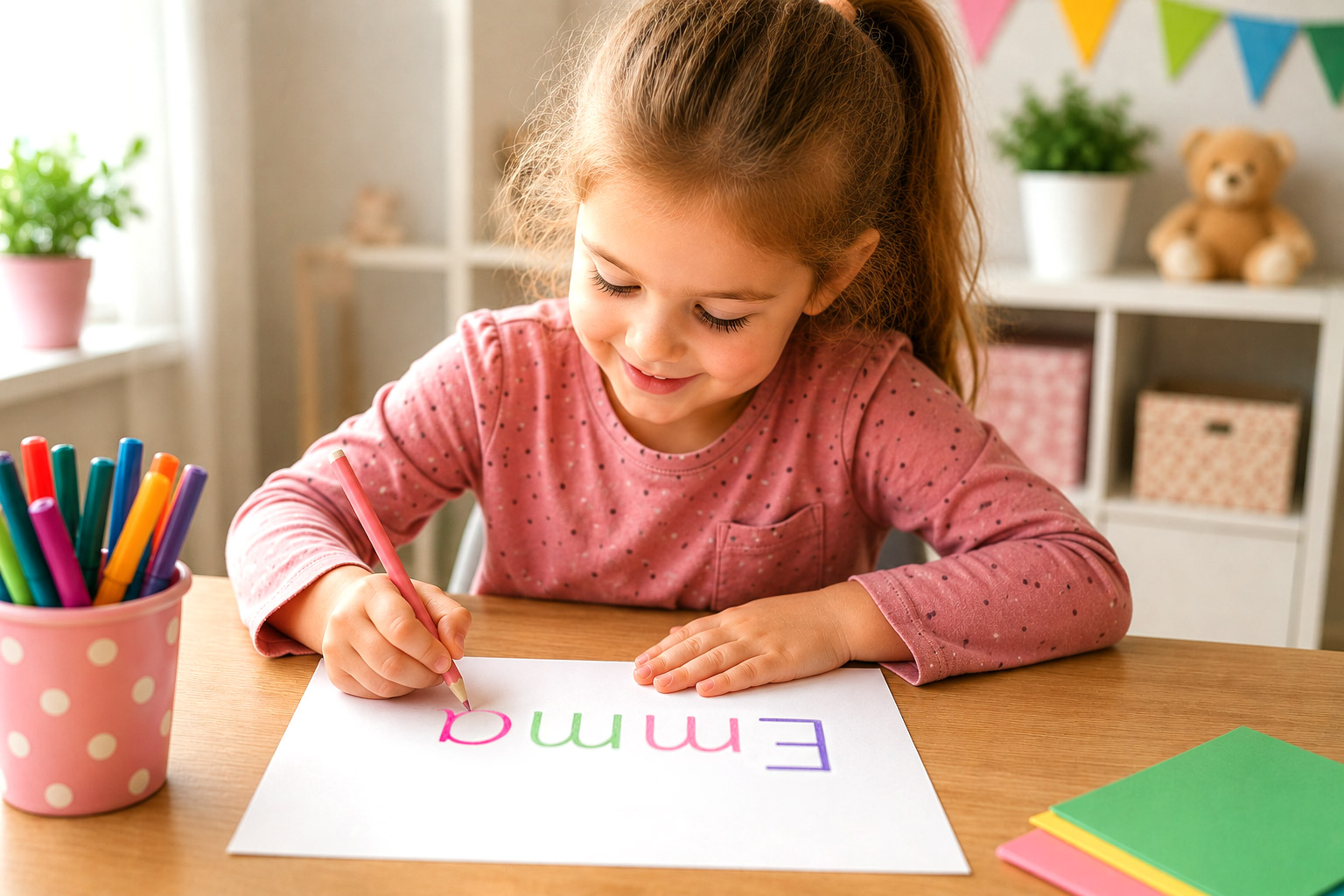
Writing Their Name is often one of the very first writing milestones for preschool children. A child’s own name is highly meaningful and can provide a natural and motivating introduction to letters and written language.
Many preschoolers become curious about the letters in their names and begin trying to recognize, trace, or write them independently. This early interest creates valuable foundations for later reading and writing success.
With playful activities, patience, and positive encouragement, parents can help children learn to write their names while making the experience enjoyable and pressure-free.
In this article:
- Why Is a Child’s Own Name So Important?
- When Can Children Begin Writing Their Names?
- Fun Activities for Learning to Write Their Name
- Common Mistakes Parents Should Avoid
- Using Digital Support Effectively
- Conclusion
Why Is a Child’s Own Name So Important?
For many children, their own name is the first word they consciously recognize and want to write. Even during the preschool years, children often become fascinated by the letters in their names and begin trying to copy or identify them.
A child’s name has special meaning because children encounter it every day on labels, artwork, books, cubbies, and personal belongings. This naturally creates motivation to learn the letters.
Writing Their Name is therefore often an important first step on the journey toward reading and writing.
When Can Children Begin Writing Their Names?
There is no specific age at which children must be able to write their names. Many preschoolers show interest between the ages of four and six.
Some children begin by writing only a few letters from their names, while others quickly learn to write the entire name. Both developmental paths are completely normal.
The most important thing is that parents avoid creating pressure. Children learn much more successfully when writing is associated with positive experiences.
Fun Activities for Learning to Write Their Name
Short, playful activities are usually much more effective than long learning sessions.
Try these engaging activities:
1. Trace Their Own Name
Write your child’s name in large letters and encourage them to trace over it using crayons, markers, or pencils.
2. Create Name Cards
Decorate colorful name cards together and display them in your child’s room or play area.
3. Form Letters with Play Dough
Children can roll play dough into long strands and use them to create the letters in their names.
4. Build Names with Magnetic Letters
Magnetic letters on the refrigerator or magnetic board make practicing names especially fun.
5. Write Names in Sand
Invite children to write their names with their fingers in sand, flour, or shaving cream.
6. Create Personalized Name Signs
Making door signs, artwork, or labels featuring their own names is highly motivating for preschoolers.
7. Paint Names with Finger Paints
Finger painting combines sensory play with early writing experiences and is especially popular with young children.
Children are often most motivated when they can use their names in meaningful and personal ways.
Common Mistakes Parents Should Avoid
Parents naturally want to help and may be tempted to correct every mistake immediately. However, constant correction can quickly lead to frustration.
Enjoyment, confidence, and small successes are much more important than perfectly formed letters.
Common mistakes include:
- putting children under pressure to perform
- constantly correcting mistakes
- planning practice sessions that are too long
- focusing only on perfect results
- comparing children with others
Children develop writing skills gradually, and every small step deserves encouragement.
Using Digital Support Effectively
Digital learning tools can provide additional motivation. Many children especially enjoy educational apps that introduce letters and allow them to trace and practice writing.
However, digital experiences should always be combined with hands-on activities. Children learn particularly well when they experience letters both on screens and through real-world activities such as drawing, writing, building, or sensory play.
ABC with Yeti offers children playful opportunities to practice letters, handwriting, and first words through more than 8 learning activities, 80 unlockable animals, and 9 handwriting fonts.
Conclusion
Writing Their Name is an important milestone for many preschool children and often represents their first step into the world of literacy.
Through playful activities, patience, and positive experiences, parents can provide valuable support while helping children develop confidence and motivation.
What matters most is not how quickly a child learns to write their name, but that they enjoy learning and celebrate their progress.
Frequently Asked Questions About Writing Their Name
At what age can children begin writing their names?
Many children begin writing individual letters or their full names between the ages of four and six.
Should children be able to write their names before starting school?
No. Some children learn this skill during preschool, while others develop it after starting school.
How can I motivate my child to practice writing their name?
Personalized activities such as name signs, artwork, and games featuring their own names are often highly motivating.
How long should preschoolers practice?
Short sessions lasting five to ten minutes are usually sufficient.
What if my child writes letters backwards?
Letter reversals are common during early writing development and usually improve naturally with practice and experience.
ABC with Yeti is a lovingly designed educational app for preschool and elementary school children.
Children learn playfully:
- letters
- handwriting
- first words
The app offers:
- 8+ learning activities
- 80 unlockable animals
- 9 different handwriting fonts
- Suitable for preschool, kindergarten and elementary school
Discover More Parent Tips
From learning letters and handwriting to fine motor skills and school readiness: explore many more practical ideas and activities for preschoolers and elementary school children.
Explore all Parent Tips →