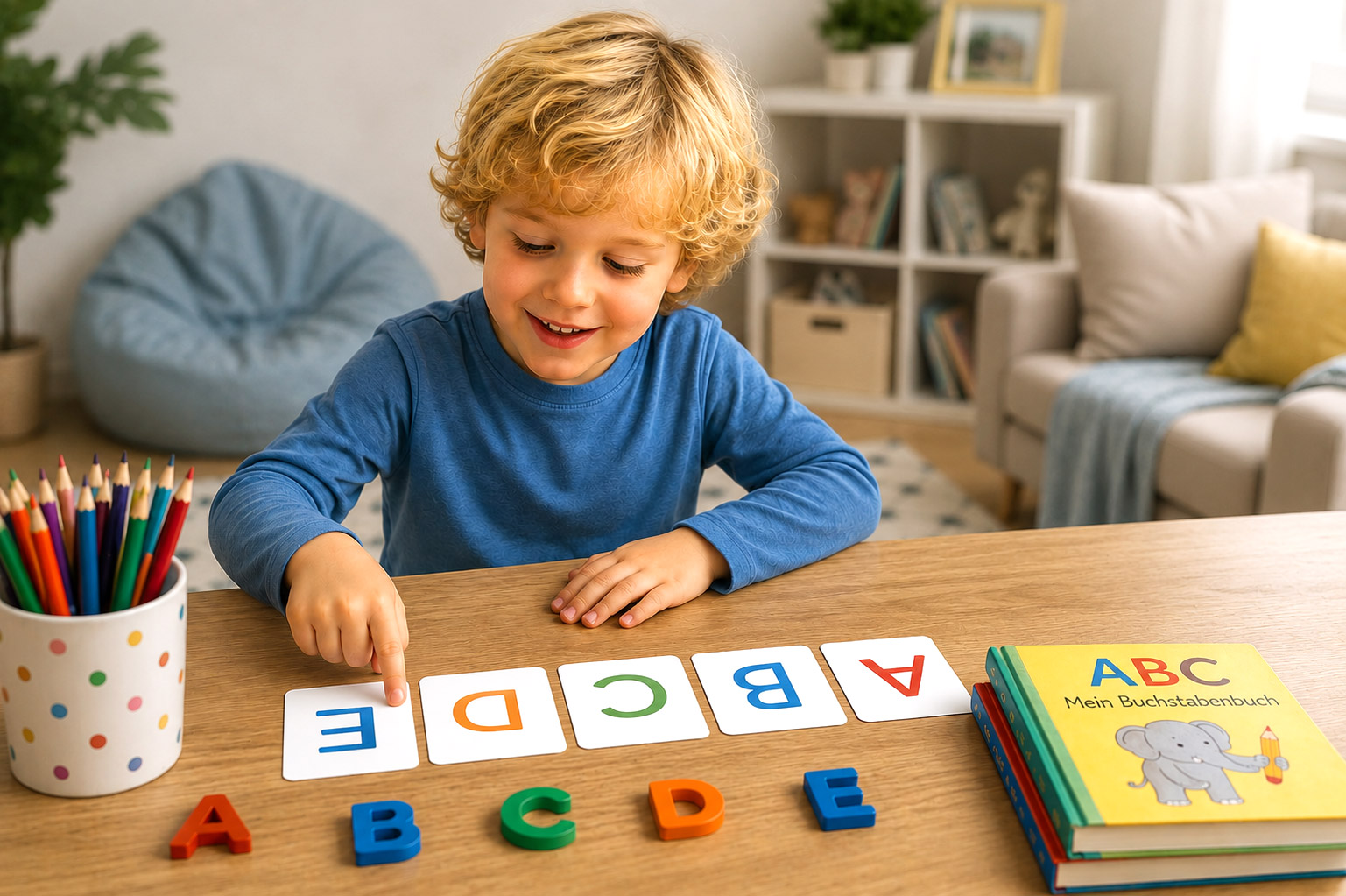
Learning Letters at Age 5 is an exciting milestone for many children. Around this age, preschoolers often become curious about letters, words, and the written language they encounter every day.
Many parents wonder when children should start learning letters. By the age of five, many children already show an interest in recognizing letters and writing their first words. Through playful activities, parents can nurture this curiosity and create a strong foundation for reading and writing.
At this stage, children do not need to know every letter perfectly. Instead, the focus should be on exploring letters, developing confidence, and enjoying positive early literacy experiences.
In this article:
- Why Is Learning Letters Important?
- When Should Children Learn Letters?
- Playful Activities at Home
- Common Mistakes When Teaching Letters
- Digital Support for Learning
- Conclusion
Why Is Learning Letters Important?
Children encounter letters long before they start school. They notice signs, packaging, books, and the names of family members. Recognizing letters builds an important foundation for later reading and writing skills.
Children who know letters can connect sounds more easily and begin understanding their first words. This significantly supports the transition to school. What matters most is that learning letters feels like an exciting discovery rather than an obligation.
Many children are especially interested in the letters in their own names. Starting with familiar letters is often a natural and highly motivating first step.
Parents can support early literacy by integrating letters naturally into everyday life. Reading together, noticing signs during walks, or talking about letters during play can all encourage children’s curiosity.
When Should Children Learn Letters?
There is no fixed age at which children need to know all letters. Many preschoolers between the ages of four and six naturally develop an interest in letters and written language.
Some children may already be able to write their names, while others are initially more interested in pictures, stories, or numbers. Both are completely normal and part of healthy development.
Parents should respond to their child’s interests without creating pressure. Enjoying learning is far more important than achieving early academic success.
Every child develops at their own pace. Providing a supportive and playful environment helps children develop confidence and positive attitudes toward learning.
Playful Activities at Home
Children learn letters especially well through active and playful experiences. Learning activities do not need to be complicated to be effective.
Popular activities include:
- recognizing letters on flashcards
- forming letters with play dough
- drawing letters in sand with a finger
- sorting magnetic letters
- finding objects that begin with specific letters
- practicing writing their own names
Parents can also point out individual letters while reading books together. This naturally helps children develop awareness of written language and print.
Short daily activities lasting five to ten minutes are usually much more effective than long learning sessions.
Children often learn best when activities involve movement, touch, and creativity. Using different materials keeps learning varied and motivating.
Common Mistakes When Teaching Letters
Parents naturally want to support their children as much as possible. However, certain well-intentioned approaches can unintentionally make learning more difficult.
Common mistakes include:
- introducing too many letters at once
- constantly correcting mistakes
- creating pressure to perform
- planning learning sessions that are too long
- comparing children with others
Children learn at different speeds. Positive feedback, encouragement, and celebrating small successes help build motivation and self-confidence.
Children who feel supported and appreciated are more likely to remain curious and motivated throughout the learning process.
Digital Support for Learning
Digital learning tools can meaningfully complement traditional letter-learning activities. Many children enjoy using tablets and interactive educational games.
It is important that digital activities are age-appropriate and encourage active learning rather than passive screen time.
Besides books, pencils, and creative activities, educational apps such as ABC with Yeti can provide additional opportunities to explore letters, sounds, handwriting, and first words in a playful way.
Digital learning tools can help children:
- recognize letters and sounds
- practice handwriting movements
- build motivation through playful activities
- learn independently at their own pace
- develop confidence through immediate feedback
ABC with Yeti supports preschool and elementary school children through more than 8 learning activities, 80 unlockable animals, and 9 different handwriting fonts.
Digital tools should always complement shared activities, reading together, and hands-on learning experiences.
Conclusion
Learning letters is an important step on the journey toward reading and writing. Children benefit most from playful activities, positive experiences, and a relaxed learning environment.
Parents do not need to follow a strict teaching plan. Supporting children’s curiosity and creating regular learning opportunities lays an important foundation for later school success.
Whether through books, games, creative activities, or digital tools, Learning Letters at Age 5 should always remain enjoyable and pressure-free.
Frequently Asked Questions About Learning Letters at Age 5
How many letters should a 5-year-old know?
There is no fixed expectation. Some children already know many letters, while others know only a few. A child’s interest and motivation are more important.
Should children learn uppercase or lowercase letters first?
Many children begin with uppercase letters because they are easier to recognize and write.
How long should preschoolers practice letters?
Short sessions of five to ten minutes per day are usually completely sufficient.
What if my child is not interested in letters?
Avoid pressure. Interest often develops naturally through books, games, and everyday experiences with print.
ABC with Yeti is a lovingly designed educational app for preschool and elementary school children.
Children learn playfully:
- letters
- handwriting
- first words
The app offers:
- 8+ learning activities
- 80 unlockable animals
- 9 different handwriting fonts
- Suitable for preschool, kindergarten and elementary school
Discover More Parent Tips
From learning letters and handwriting to fine motor skills and school readiness: explore many more practical ideas and activities for preschoolers and elementary school children.
Explore all Parent Tips →