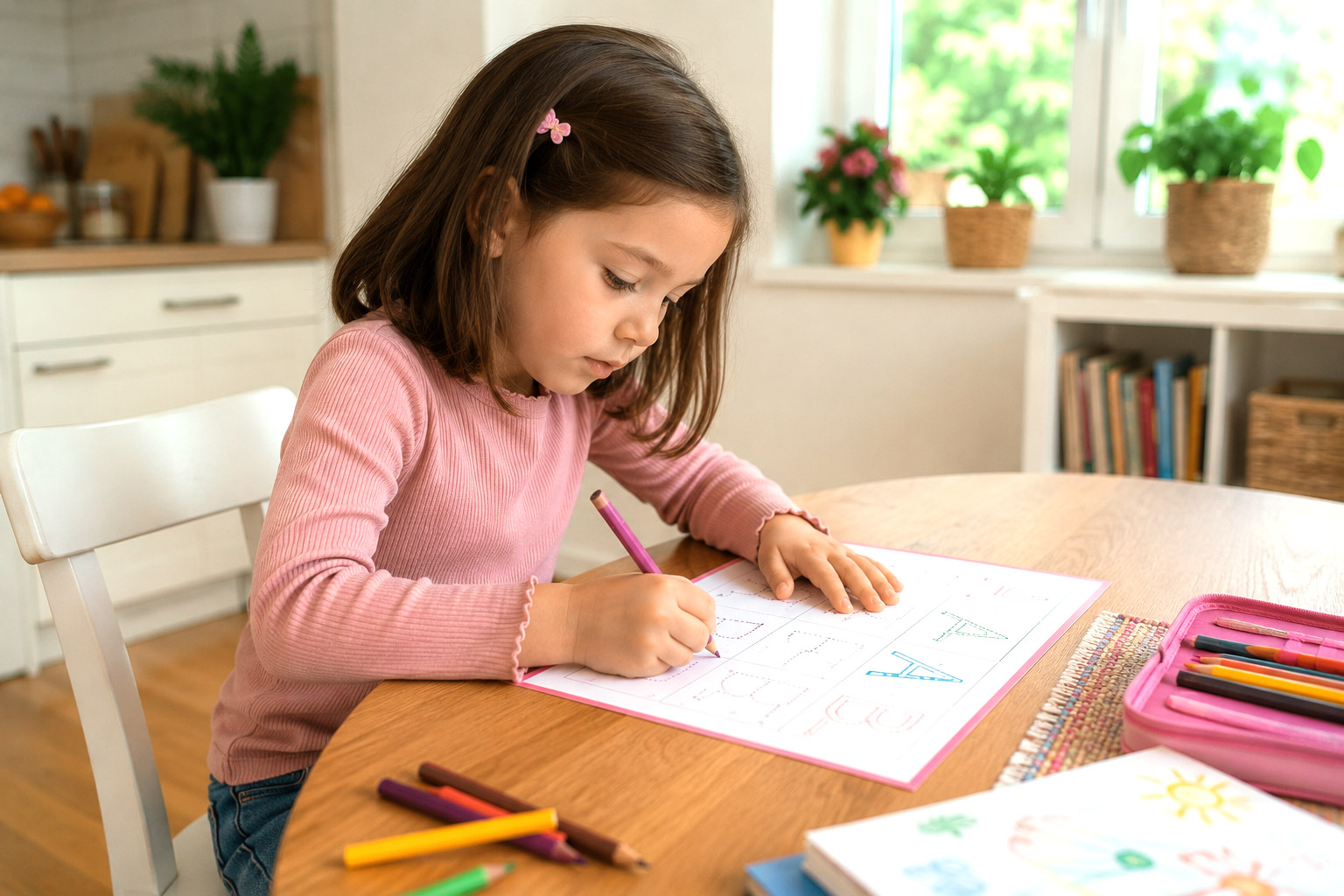
Correct Pencil Grip for Kids plays an important role when children begin drawing, tracing, and writing. A relaxed pencil grip helps children write comfortably and develop fluent handwriting later on.
Many parents worry when their child holds a pencil differently from others. In most cases, unusual grips during preschool years are completely normal and improve naturally as children’s fine motor skills mature.
Rather than focusing on perfection, parents should encourage playful activities that strengthen hand muscles and support comfortable writing habits.
In this article:
- Why Is Correct Pencil Grip Important?
- How Should Preschoolers Hold a Pencil?
- Common Pencil Grip Mistakes
- Playful Activities to Improve Pencil Grip
- When Should Parents Intervene?
- Conclusion
Why Is Correct Pencil Grip Important?
The right pencil grip makes learning to write easier and helps children draw letters more comfortably and accurately.
A relaxed grip allows children to move the pencil more freely and reduces hand fatigue. Children who hold the pencil comfortably often find writing less exhausting and can concentrate better on learning.
During preschool years, fine motor skills are still developing. Therefore, it is completely normal if a child’s pencil grip initially looks unusual. With practice and growing hand strength, many children naturally develop an efficient grip over time.
How Should Preschoolers Hold a Pencil?
Experts generally recommend the so-called tripod grip. In this grip, the pencil rests on the middle finger while the thumb and index finger guide it. This position allows relaxed and precise writing movements.
In the tripod grip:
- the pencil rests on the middle finger
- the thumb holds the pencil
- the index finger guides the pencil
The fingers should remain relaxed. Holding the pencil too tightly can make writing difficult and may quickly tire children’s hands.
Good sitting posture is equally important:
- both feet should rest comfortably on the floor
- the back should remain upright
- the paper should be positioned slightly at an angle
- the workspace should have sufficient lighting
Common Pencil Grip Mistakes
Many children temporarily use unusual grips while developing their writing skills. Most of these phases are not a cause for concern.
Common difficulties include:
- gripping the pencil too tightly
- holding the pencil with the whole fist
- crossing or overlapping fingers
- very tense hand posture
- pressing too hard on the paper
If writing appears painful, very tiring, or extremely tense, parents may gently support their child and encourage more relaxed movements.
Playful Activities to Improve Pencil Grip
The best preparation for good pencil grip often happens away from writing activities.
Helpful activities include:
- stringing beads
- playing with modeling clay
- using tweezers to pick up small objects
- cutting with child-safe scissors
- drawing and coloring pictures
- tracing lines and patterns
These activities strengthen hand and finger muscles while improving dexterity and coordination.
When Should Parents Intervene?
Not every unusual pencil grip needs immediate correction.
Children need time to develop their own movement patterns. Parents should mainly intervene when:
- the child complains about pain
- the hand becomes tired very quickly
- writing looks extremely tense
- letters cannot be controlled or formed properly
Praise, patience, and playful practice are usually much more helpful than constant corrections.
Conclusion
Correct Pencil Grip for Kids develops gradually during preschool years. The most important goals are relaxed movements, comfortable posture, and positive writing experiences.
Parents do not need to correct every small variation. Instead, children benefit most from fine motor activities, encouragement, and regular opportunities to draw and write.
With patience and playful practice, most children naturally develop efficient and comfortable writing habits.
Frequently Asked Questions About Pencil Grip for Children
How should children hold a pencil correctly?
The recommended tripod grip places the pencil on the middle finger while the thumb and index finger guide it.
Does pencil grip need to be perfect in preschool?
No. Many preschool children gradually develop their pencil grip over time, and small variations are usually normal.
When should parents correct pencil grip?
Parents should mainly intervene if writing causes pain, excessive fatigue, or severe tension.
Which activities improve pencil grip?
Stringing beads, modeling clay, cutting, coloring, and other fine motor activities strengthen children’s hands and fingers.
ABC with Yeti is a lovingly designed educational app for preschool and elementary school children.
Children learn playfully:
- letters
- handwriting
- first words
The app offers:
- 8+ learning activities
- 80 unlockable animals
- 9 different handwriting fonts
- Suitable for preschool, kindergarten and elementary school
Discover More Parent Tips
From learning letters and handwriting to fine motor skills and school readiness: explore many more practical ideas and activities for preschoolers and elementary school children.
Explore all Parent Tips →