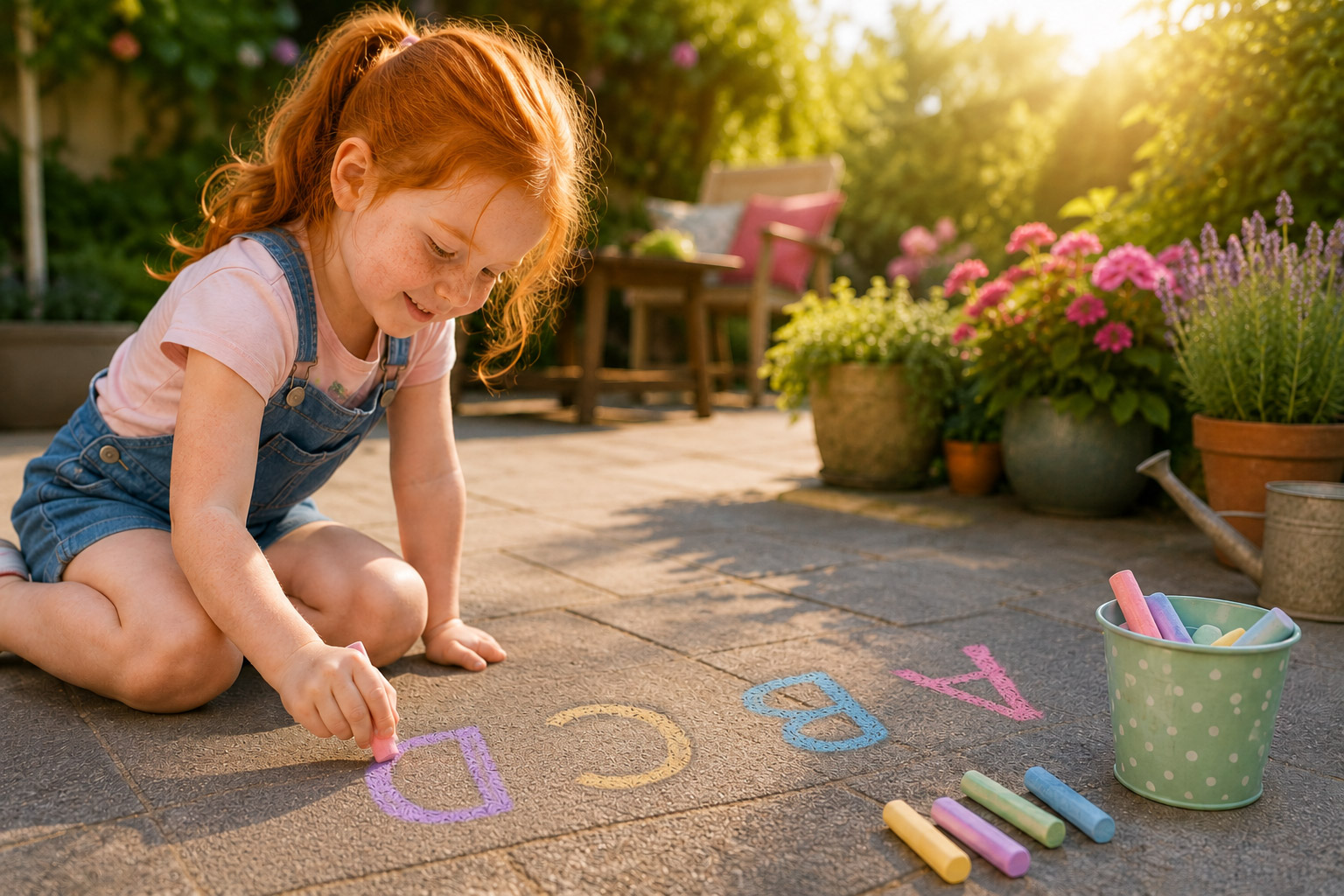
Practicing Letter Writing is an important step on the journey toward reading and writing. Many preschool children become curious about letters and want to write their names or first words.
Children not only learn letter shapes while writing, but also strengthen their fine motor skills, hand-eye coordination, and concentration. The most important thing is to keep writing activities playful and pressure-free. Early writing experiences should always focus on enjoyment rather than perfection.
In this article:
- Why Is Practicing Letter Writing Important?
- When Should Children Practice Letter Writing?
- The Best Activities at Home
- Common Mistakes to Avoid
- Using Digital Learning Tools
- Conclusion
Why Is Practicing Letter Writing Important?
Writing individual letters is an important milestone on the path toward reading and writing. Children learn letter shapes while simultaneously training their fine motor skills and hand-eye coordination.
Many preschool children become interested in letters at an early age and want to write their names or individual words. This natural curiosity should be encouraged through playful activities rather than formal instruction.
The key is ensuring that learning remains enjoyable and never creates unnecessary pressure. Positive experiences help children develop long-term motivation for writing and literacy.
When Should Children Practice Letter Writing?
Many children begin tracing or copying their first letters between the ages of four and six. However, there is no fixed age at which children must start writing. Every child develops at an individual pace.
The letters in a child’s own name are often especially motivating because they have personal meaning and encourage children to practice repeatedly.
Parents should follow their child’s interests rather than focusing on specific milestones or expectations. Supporting natural curiosity leads to more positive learning experiences.
The Best Activities at Home
Short and varied activities are usually more successful than long learning sessions.
- tracing letters
- drawing letters in sand
- writing letters with finger paint
- forming letters from modeling clay
- drawing large letters with sidewalk chalk
- practicing writing one’s own name
These playful activities help children experience letters with multiple senses and strengthen both writing skills and fine motor development. Multi-sensory learning is particularly effective during the preschool years.
It is important to celebrate small successes and praise effort rather than expecting perfect results.
Common Mistakes to Avoid
A common mistake is expecting perfectly formed letters too early.
At the beginning, letters may appear uneven, oversized, or incomplete. Children first need time to develop the necessary movement patterns and control. Mirror writing or inconsistent letter sizes are completely normal during early writing development.
Long practice sessions can also reduce motivation. Short activities of five to ten minutes are usually entirely sufficient for preschool children.
Using Digital Learning Tools
Digital learning resources can usefully complement early writing activities.
Apps that include tracing exercises, interactive games, and playful writing activities often motivate children to practice more frequently. However, digital activities should always complement rather than replace real writing experiences on paper or with hands-on materials.
It is important that digital content is age-appropriate and designed specifically for young learners. Combining digital and physical experiences often leads to the best results.
Conclusion
Practicing Letter Writing forms an important foundation for later handwriting development.
Through playful activities and a positive learning environment, parents can effectively support their children at home.
Small daily activities are often much more effective than occasional long learning sessions.
Frequently Asked Questions About Practicing Letter Writing
At what age can children begin practicing letter writing?
Many children begin tracing or copying letters between four and six years of age.
Which letters should children start with?
The letters in a child’s own name are usually especially motivating.
How long should preschool children practice?
Short sessions of five to ten minutes are generally sufficient.
Do letters need to look perfect from the beginning?
No. Uneven or differently sized letters are completely normal during early writing development.
ABC with Yeti is a lovingly designed educational app for preschool and elementary school children.
Children learn playfully:
- letters
- handwriting
- first words
The app offers:
- 8+ learning activities
- 80 unlockable animals
- 9 different handwriting fonts
- Suitable for preschool, kindergarten and elementary school
Discover More Parent Tips
From learning letters and handwriting to fine motor skills and school readiness: explore many more practical activities and ideas for preschool and elementary school children.
Explore all Parent Tips →