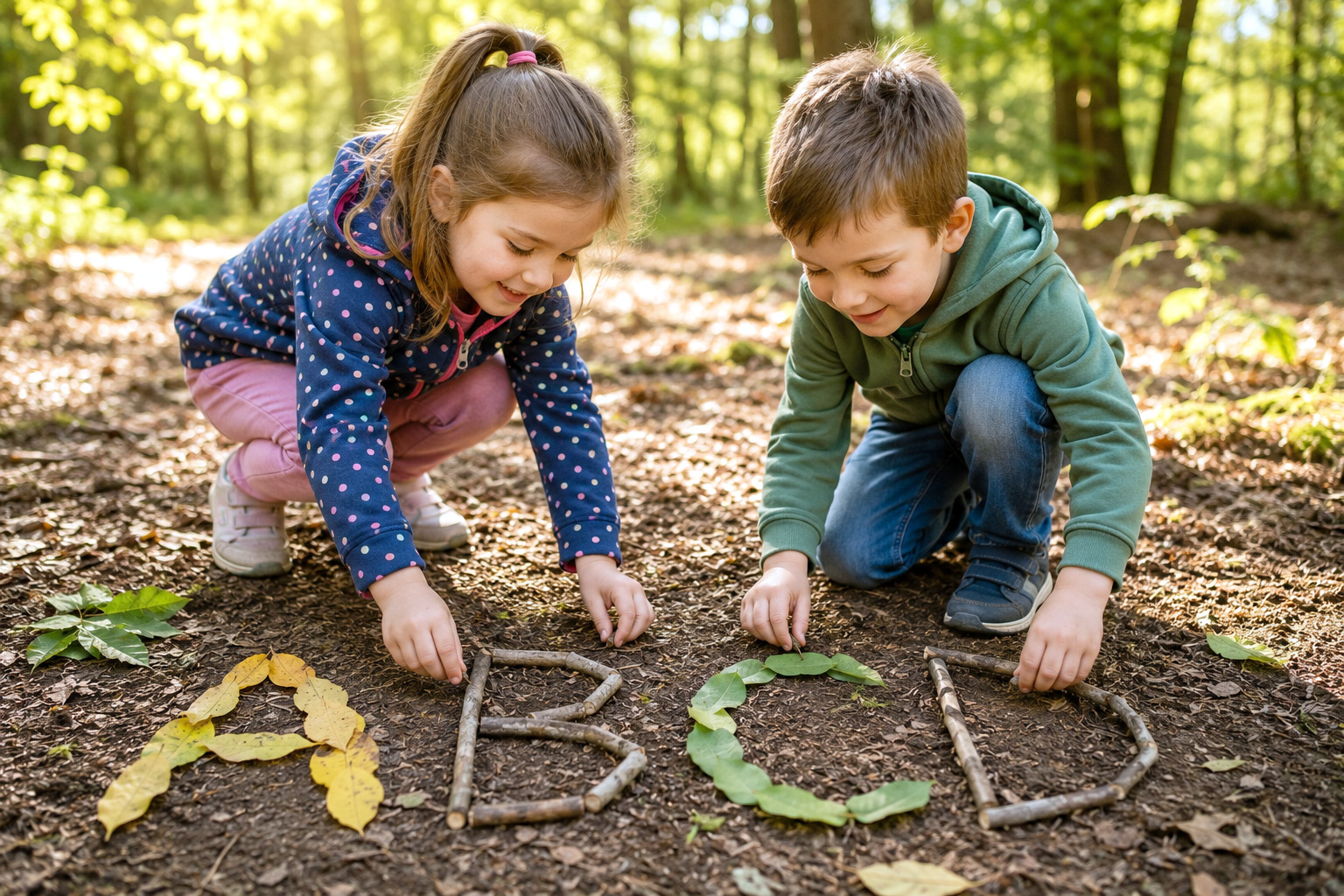
Multisensory Letter Learning helps preschool children learn letters in a natural and engaging way. When children can see, hear, touch, and actively explore letters, learning often becomes easier and more enjoyable.
Many parents notice that preschoolers remember letters better when they experience them through play instead of only looking at them on paper. Using multiple senses supports both understanding and long-term memory.
The good news is that multisensory activities can easily be incorporated into everyday family life. Simple hands-on experiences often make a big difference in early literacy development.
In this article:
- Why Using Multiple Senses Supports Learning
- Seeing, Hearing, and Feeling Letters
- 5 Easy Multisensory Letter Activities at Home
- Common Mistakes Parents Should Avoid
- Using Digital Tools Effectively
- Conclusion
Why Does Multisensory Letter Learning Help?
Children learn particularly well when several senses are involved at the same time. New information is often easier to understand and remember when children can not only see it, but also hear it, touch it, and actively explore it themselves.
This is especially true for letters. Preschool children frequently remember letters more successfully when they experience them actively rather than simply looking at them on a worksheet.
Multisensory Letter Learning is therefore widely used in modern early childhood education because it supports different learning styles and keeps children motivated.
Seeing, Hearing, and Feeling Letters
During Multisensory Letter Learning, several senses can be involved simultaneously.
Children can experience letters through:
- Seeing: looking at and recognizing letters
- Hearing: listening to letter sounds and phonics
- Touch: tracing or feeling letter shapes
- Movement: building, forming, or writing letters
- Speaking: saying letter sounds aloud
The more senses that participate in the learning process, the easier it often becomes for children to store and recall new information.
5 Easy Multisensory Letter Activities at Home
Many multisensory activities require little preparation and can easily become part of everyday routines.
Try these simple ideas:
1. Form Letters with Play Dough
Children can roll play dough into long strands and shape them into letters. This activity strengthens both letter recognition and fine motor skills.
2. Write Letters in Sand
A tray filled with sand, rice, or flour allows children to trace and practice letters with their fingers while simultaneously feeling the letter shapes.
3. Build Letters with Natural Materials
Leaves, sticks, stones, shells, or small branches can be arranged to form letters. Outdoor learning experiences often make letter practice especially memorable.
4. Feel and Trace Letters
Cut out large cardboard letters and invite children to trace them with closed eyes. Feeling letter shapes supports tactile learning and memory.
5. Discover Letters in Everyday Life
Look for letters together on street signs, cereal boxes, books, or store signs. Children often love turning everyday outings into playful letter hunts.
Common Mistakes Parents Should Avoid
Parents naturally want to see quick progress, but placing too much pressure on children can reduce motivation and enjoyment.
Common mistakes include:
- expecting children to recognize or write letters perfectly right away
- correcting every mistake immediately
- planning overly long practice sessions
- comparing children with siblings or peers
- focusing on results instead of the learning experience
Short, playful activities are usually much more effective than long formal lessons. Small steps and positive encouragement lead to lasting success.
Using Digital Tools Effectively
Digital learning tools can be a valuable addition to hands-on activities. Many educational apps combine visual, auditory, and interactive experiences that support Multisensory Letter Learning.
Apps that introduce letters, pronounce sounds, and encourage tracing can help children practice independently while staying motivated.
However, digital activities should always complement—not replace—real-world experiences such as drawing, reading, crafting, and sensory play.
ABC with Yeti supports children through playful letter activities, handwriting practice, and first words using more than 8 educational games, 80 unlockable animals, and 9 handwriting fonts.
Conclusion
Multisensory Letter Learning allows preschool children to experience letters in meaningful and memorable ways.
By seeing, hearing, touching, speaking, and actively exploring letters, children often develop stronger early literacy skills and greater confidence.
Simple activities at home can provide valuable support while keeping learning playful, engaging, and pressure-free.
Frequently Asked Questions About Multisensory Letter Learning
Why do children learn better when multiple senses are involved?
When children see, hear, touch, and actively explore information, they are often able to remember and understand it more easily.
What does multisensory learning mean?
Multisensory learning means that children use several senses at the same time, such as seeing, hearing, touching, speaking, and moving.
Which multisensory activities are best for preschoolers?
Popular activities include forming letters with play dough, writing in sand, tracing letters, and searching for letters in everyday life.
Can educational apps replace hands-on learning?
No. Educational apps are most effective when combined with real-world experiences such as drawing, reading, and sensory play.
How long should letter activities last?
Short activities lasting five to ten minutes are usually sufficient for preschool children.
ABC with Yeti is a lovingly designed educational app for preschool and elementary school children.
Children learn playfully:
- letters
- handwriting
- first words
The app offers:
- 8+ learning activities
- 80 unlockable animals
- 9 different handwriting fonts
- Suitable for preschool, kindergarten and elementary school
Discover More Parent Tips
From learning letters and handwriting to fine motor skills and school readiness: explore many more practical ideas and activities for preschoolers and elementary school children.
Explore all Parent Tips →